
Article Information
Updated: June 30, 2026
Editorial details
The RodneyDYoung.org Editorial Team creates informational content focused on auto insurance costs, coverage types, discount opportunities, payment options, quote comparison, and practical shopping topics for U.S. drivers.
This guide has been reviewed and updated to improve accuracy, clarity, source quality, structure, and usefulness for readers comparing low-mileage car insurance discounts and usage-based insurance options.
This content is for general informational purposes only and does not constitute insurance, legal, or financial advice. Coverage availability, pricing, discounts, payment options, data collection practices, and policy terms vary by insurer, state, driver profile, vehicle, and underwriting guidelines. RodneyDYoung.org is an independent informational website and is not affiliated with any insurer.
Low-mileage car insurance discounts may help drivers who spend less time on the road reduce their auto insurance costs. These discounts are not automatic, and they do not work the same way with every insurer. Eligibility can depend on your annual mileage, state, vehicle use, driving record, verification method, policy type, and whether you agree to use a telematics app or device.
Driving fewer miles can matter because how much you use your vehicle is one of the factors that may affect the price of an auto insurance policy [1]. Still, mileage is only one part of the pricing picture. Your location, vehicle, driving history, coverage limits, deductibles, and discounts may also affect what you pay.
Quick takeaway
A low-mileage discount can be useful if you drive less than average, but it should be compared carefully. Ask how mileage is verified, whether telematics data is collected, whether the discount can change at renewal, and whether the policy still gives you enough coverage.
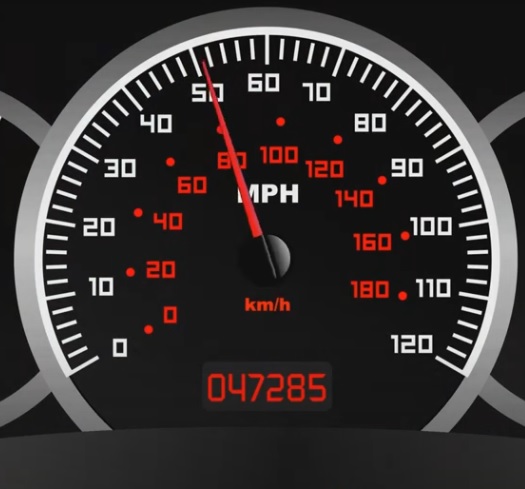
Driving less may help reduce exposure to accidents, but each insurer sets its own eligibility rules.
What are low-mileage car insurance discounts?
A low-mileage car insurance discount is a potential premium reduction for drivers who use their vehicles less than the insurer’s standard mileage assumptions. Insurers may view lower annual mileage as a lower exposure to driving-related risk, but the discount depends on the company’s rules and how your mileage is verified.
These discounts may be especially relevant for remote workers, retirees, students, public transit commuters, households with a second car, and drivers who mostly use a vehicle on weekends. They may also help drivers who are reviewing broader safe driver discount opportunities and want to understand which savings categories fit their actual driving habits.
Low-mileage discounts may fit drivers who…
- Work from home or commute only a few days per week.
- Use public transit, walking, biking, or rideshare for many routine trips.
- Own a second vehicle that is driven only occasionally.
- Are retired or have a flexible schedule with limited daily driving.
- Can honestly verify annual mileage through odometer readings, app data, or other insurer-approved methods.
How low-mileage discounts work
Low-mileage discounts usually depend on how many miles you drive during a policy period or year. Some insurers may ask for an estimated annual mileage figure. Others may require odometer readings, service records, inspection records, or telematics data. A telematics program may use a smartphone app, plug-in device, or vehicle-connected system to measure mileage and driving behavior.
The National Association of Insurance Commissioners explains that usage-based insurance, also known as telematics, may track driving behavior through a device or smartphone. Depending on the program, data can include miles driven, time of day, where the vehicle is driven, rapid acceleration, hard braking, hard cornering, and air bag deployment [2].
Telematics privacy reminder
Before joining a telematics or usage-based program, review what data is collected, how long it is stored, whether location data is used, whether the discount can change, and whether your driving data can affect future pricing.
Low-mileage discount vs. pay-per-mile vs. telematics
Low-mileage discounts, pay-per-mile policies, and telematics programs are related, but they are not the same thing. A traditional low-mileage discount may use annual mileage as one rating factor. A pay-per-mile policy usually charges a base rate plus a mileage-based charge. A telematics program may evaluate both how much you drive and how you drive.
| Option | How it usually works | Best fit | What to review first |
|---|---|---|---|
| Traditional low-mileage discount | The insurer may apply a discount if your annual mileage falls below its eligibility level. | Drivers who consistently drive less than typical mileage assumptions. | How mileage is verified and whether the discount can change at renewal. |
| Pay-per-mile insurance | The policy may include a base rate plus a charge based on miles driven. | Very infrequent drivers or households with an occasional-use vehicle. | Per-mile rate, daily mileage caps, base premium, fees, and state availability. |
| Telematics or usage-based program | An app, device, or vehicle system may track mileage and driving behavior. | Drivers comfortable sharing data and confident in their driving habits. | Privacy terms, tracked behaviors, renewal impact, and whether participation can increase or reduce savings. |
| Standard policy with reported mileage | You provide expected annual mileage as part of the quote or renewal process. | Drivers who want a simpler policy without app or device tracking. | Whether the estimate is accurate and how changes should be reported. |
Because usage, location, coverage choices, and driving behavior can interact, it is useful to review the Rodney D. Young auto insurance guide along with your mileage. A low-mileage discount may help, but it may not fully offset other rating factors such as ZIP code, vehicle type, coverage limits, deductibles, and driving history.
How insurers verify mileage
Insurers may verify mileage in several ways. Some methods are simple and require only an estimate. Others are more precise and may require ongoing data collection. The more accurate the verification method, the more important it is to understand how the data affects your quote and renewal.
| Verification method | How it works | Benefits | Possible concerns |
|---|---|---|---|
| Self-reported mileage | You estimate annual mileage during the quote or renewal process. | Simple and convenient. | May be less precise, and inaccurate estimates can affect pricing or renewal review. |
| Odometer reading | You submit a current odometer photo, service record, inspection document, or other mileage proof. | More accurate than a rough estimate. | May need to be updated periodically. |
| Telematics app or device | A smartphone app, plug-in device, or connected vehicle system tracks mileage and sometimes driving behavior. | Can provide detailed mileage and driving data. | May collect location, time-of-day, braking, acceleration, and other behavior data depending on the program. |
| Policy renewal review | The insurer re-evaluates mileage or usage at renewal. | Can keep pricing more aligned with actual vehicle use. | The discount may increase, decrease, or disappear if mileage changes. |
Report mileage honestly
Do not understate mileage to chase a discount. Insurance applications and renewals should be accurate. If your driving habits change, ask the insurer how to update your mileage so your policy information stays consistent.
Factors that affect low-mileage discount eligibility
Low mileage can help some drivers, but it does not work in isolation. Insurers may also consider how the vehicle is used, where it is garaged, the driver’s history, the selected coverage, the deductible, and other rating factors. Credit-based insurance information may also be used in some states where permitted by law [1].
If you drive fewer miles because you are a safer, more consistent driver, that may also support other savings opportunities. Maintaining clean driving habits can matter beyond mileage, especially if you are trying to maintain a safe driver discount or qualify for usage-based savings.
Common eligibility factors
- Annual mileage: Insurers may use mileage tiers or estimated annual miles.
- Vehicle use: Pleasure use, commuting, business use, delivery, and rideshare use may be treated differently.
- State availability: Discounts and telematics programs may not be available in every state.
- Driving behavior: Some programs may consider braking, acceleration, time of day, or cornering.
- Coverage choices: Liability limits, collision, comprehensive, and deductibles still affect the final premium.
- Renewal review: Mileage and discount eligibility can change when the policy renews.
Who should be careful with low-mileage or telematics programs?
Low-mileage discounts can be helpful, but they are not ideal for every driver. If your mileage changes often, if you drive for delivery or rideshare, or if you are uncomfortable sharing driving data, a traditional quote may be easier to manage. Drivers who often drive late at night, in heavy traffic, or in conditions that may trigger hard braking should also review how the program scores driving behavior.
Be careful if…
- Your annual mileage is unpredictable.
- You use your vehicle for delivery, rideshare, or business driving.
- You are uncomfortable with location or driving-behavior tracking.
- You frequently drive during high-risk hours or heavy traffic.
- You may exceed the mileage threshold during the policy term.
- You do not understand whether the program can affect renewal pricing.
How to maximize a low-mileage discount responsibly
The best way to use a low-mileage discount is to combine accurate mileage reporting with a policy that still fits your coverage needs. Do not reduce liability limits, raise deductibles, or remove important coverage just to make the premium look lower. The NAIC recommends reviewing your policy regularly and checking whether deductibles and physical damage coverage still make sense for your situation [3].
If you are reviewing deductibles as part of your savings plan, consider how deductible changes affect claim-time costs. The impact of deductibles on insurance can be bigger than the monthly premium difference if you have a covered loss and need to pay more out of pocket.
Responsible savings checklist
- Track your mileage accurately before requesting the discount.
- Ask how the insurer verifies mileage.
- Confirm whether the discount applies at purchase, renewal, or after a monitoring period.
- Review what telematics data is collected before enrolling.
- Compare the full premium, not only the discount label.
- Make sure liability limits and deductibles still fit your financial risk.
- Ask whether the discount can change if your mileage increases.

Odometer readings, apps, or other verification methods may be used depending on the insurer.
What to ask before joining a telematics program
Telematics may help some drivers lower costs, but it deserves a careful review. The NAIC notes that telematics devices may measure several driving behaviors and that the level of data collected can depend on the technology used and the policyholder’s willingness to share personal data [4].
Questions to ask the insurer
- What data does the app, device, or vehicle system collect?
- Does the program track location or only mileage?
- Can the discount decrease or disappear at renewal?
- Can driving behavior affect future pricing?
- How long does the insurer keep the data?
- Can you leave the program, and what happens if you do?
- Is the program available in your state and for your policy type?
Low-mileage programs and insurer comparison
Some insurers offer traditional mileage-based discounts, while others use telematics or usage-based pricing. Program names, discount amounts, eligibility rules, and state availability can change. Instead of relying on a fixed list of companies, compare current quotes and read the program terms directly before enrolling.
When comparing insurers, price is only one factor. You should also review coverage options, claim support, billing rules, customer service access, and financial strength. AM Best describes a Financial Strength Rating as an independent opinion of an insurer’s financial strength and ability to meet ongoing insurance policy and contract obligations [5].
| What to compare | Why it matters | Question to ask |
|---|---|---|
| Discount eligibility | A program may not be available in every state or for every driver. | What mileage level or driving profile is required? |
| Verification method | The method can affect privacy, convenience, and renewal pricing. | Do you need an app, device, odometer photo, or self-reporting? |
| Coverage limits | A low premium may come from lower limits, not only a mileage discount. | Are the limits the same as the other quotes? |
| Deductibles | Higher deductibles can reduce premiums but increase claim-time costs. | Could you afford the deductible after a covered loss? |
| Renewal rules | The discount may change if your mileage or driving behavior changes. | How is the discount recalculated at renewal? |
| Company strength | Financial strength can be one useful signal when comparing insurers. | Can you review independent financial strength information? |
Do low-mileage discounts replace good coverage?
No. A discount can lower the price, but it does not decide whether your policy is strong enough. You still need to review liability limits, uninsured or underinsured motorist options where available, collision and comprehensive coverage, deductibles, and exclusions.
If you are comparing policies, it can help to review the key features in different auto insurance policies before deciding. A lower mileage discount may be useful, but the policy should still match your vehicle, state requirements, lender requirements, and ability to pay out-of-pocket costs after a claim.
Coverage reminder
Do not trade away important coverage just to lower the premium. A cheaper policy can become expensive if the deductible is too high, the limits are too low, or the coverage you expected is not included.
FAQ about low-mileage car insurance discounts
What qualifies as low mileage for car insurance?
There is no single mileage number that applies to every insurer. Each company may set its own mileage tiers, verification methods, and eligibility rules. Ask the insurer how it defines low mileage in your state.
How do insurers verify mileage?
Verification may include self-reported mileage, odometer readings, service records, inspection records, a smartphone app, a plug-in device, or a connected vehicle system. The method depends on the insurer and program.
Is pay-per-mile insurance the same as a low-mileage discount?
No. A low-mileage discount is usually a discount applied to a traditional policy. Pay-per-mile insurance is a pricing model that may charge a base rate plus a mileage-based charge.
Can telematics increase my rate?
It depends on the program and state rules. Some telematics programs may only offer a potential discount, while others may use driving data more broadly. Review the terms before enrolling.
Do low-mileage discounts apply in every state?
No. Availability can vary by insurer, state, policy type, and driver profile. Always confirm eligibility during the quote process.
Should remote workers ask for a low-mileage discount?
Yes, remote workers who drive less than before may want to ask. The discount is not guaranteed, but accurate mileage information may help the insurer rate the policy more appropriately.
Final thoughts on low-mileage car insurance discounts
Low-mileage car insurance discounts can be useful for drivers who genuinely use their vehicles less often. The key is to compare the full policy, not only the discount. Mileage may help lower the premium, but coverage limits, deductibles, location, vehicle use, driving record, and insurer rules still matter.
Before choosing a low-mileage or telematics program, ask how mileage is verified, what data is collected, how renewal pricing works, and whether the final policy gives you enough protection. A good discount should support a better insurance decision, not push you into weak coverage.
Start with your ZIP code
Enter your ZIP code to begin comparing available auto insurance quote options from participating providers.
References
- Insurance Information Institute — What Determines the Price of an Auto Insurance Policy? ↩
- National Association of Insurance Commissioners — Understanding Usage-Based Insurance ↩
- National Association of Insurance Commissioners — Tips for Saving on Your Auto Insurance ↩
- National Association of Insurance Commissioners — Telematics ↩
- AM Best — Guide to Best’s Financial Strength Ratings ↩